Why Hiroshima Pauses at 8:15 Every August 6
Key Vocabulary
| Word or Phrase | Meaning | Example |
|---|---|---|
| commemorate | To remember and show respect for an important person or event. | The ceremony commemorates those who died after the bombing. |
| silent prayer | A quiet period in which people privately pray or reflect. | The crowd observed a silent prayer at 8:15. |
| survivor | A person who remains alive after a dangerous or destructive event. | Survivors have shared their experiences with younger generations. |
| abolition | The official ending or removal of a system or practice. | The declaration calls for the abolition of nuclear weapons. |
| testimony | A spoken or written account of something a person experienced. | The museum preserves the testimony of atomic-bomb survivors. |
Article
At 8:15 on the morning of August 6, Hiroshima becomes unusually quiet. A peace bell sounds, sirens can be heard across the city, and people observe a minute of silence. The time marks the moment when an atomic bomb exploded over Hiroshima in 1945.
The city holds its annual Peace Memorial Ceremony in Peace Memorial Park. The 2026 ceremony is scheduled for August 6 from 8:00 to 8:50 in the morning. Around 7,000 seats will be available in the park, with additional indoor spaces showing a live broadcast. [1]
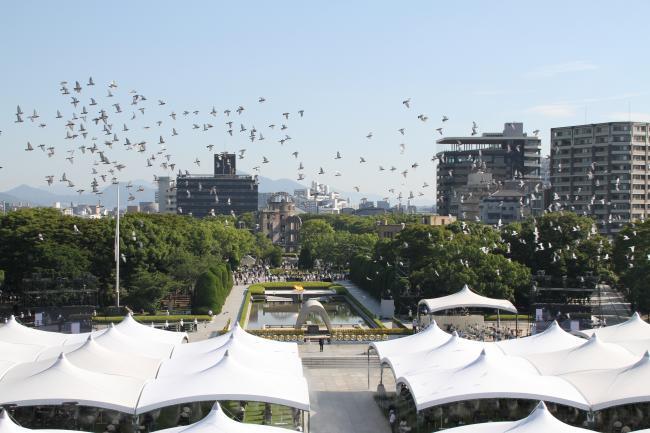
The ceremony includes flowers, speeches, a register containing the names of people who have died, and a declaration by the mayor. At exactly 8:15, participants offer a silent prayer while the peace bell is rung. Doves are released later in the program as a symbol of peace. [1]
The silence is not limited to the ceremony site. The City of Hiroshima encourages people in homes, schools and workplaces to pause at the same time. This allows residents who cannot attend the event to participate in a shared act of remembrance. [2]
The mayor's Peace Declaration is another important part of the ceremony. It reflects on the experiences of atomic-bomb survivors, known as hibakusha, and calls for the abolition of nuclear weapons and the achievement of lasting peace. The declaration is sent to governments and organizations around the world. [2]
The event is both local and international. Survivors and bereaved families attend alongside political leaders, diplomats, visitors and representatives from other cities. Security checks and traffic restrictions are necessary because of the number and variety of participants. [1]
Remembering such an event involves difficult choices. Organizers must explain history honestly without turning suffering into entertainment. Museums, schools and ceremonies also need to help younger generations understand an event that occurred before their parents or grandparents were born.
The number of living survivors is decreasing, which makes recorded testimony and historical education increasingly important. Personal stories can communicate details that statistics alone cannot show, including the long-term effects on health, families and daily life.
Hiroshima today is a modern city rather than only a memorial site. Residents work, study, raise families and enjoy ordinary life there. The annual ceremony does not require the city to remain permanently defined by destruction, but it keeps a particular historical responsibility visible.
The pause at 8:15 shows how one minute can connect private memory, public history and international debate. Its meaning depends not only on looking back at what happened, but also on deciding what lessons should influence the future.
Discussion Questions
- How does your country commemorate difficult events from its history?
- What role should personal testimony play in history education?
- How can a city remember a tragedy without allowing it to define its entire identity?
- What responsibilities do younger generations have toward events they did not experience?
- Which historical lesson do you think the international community most needs to remember today?