Why ASEAN Day Brings Southeast Asia Together Every August 8
Key Vocabulary
The date when an important past event is remembered each year.
ASEAN marks its 59th anniversary in 2026.
Connected to a particular area containing several places or countries.
The countries discuss regional problems together.
The act of working together toward a shared goal.
Disaster response requires cooperation between governments.
A country that officially belongs to an organization.
Each ASEAN member state keeps its own government.
The qualities and connections that shape how a person or group sees itself.
National and regional identity can exist together.
Article
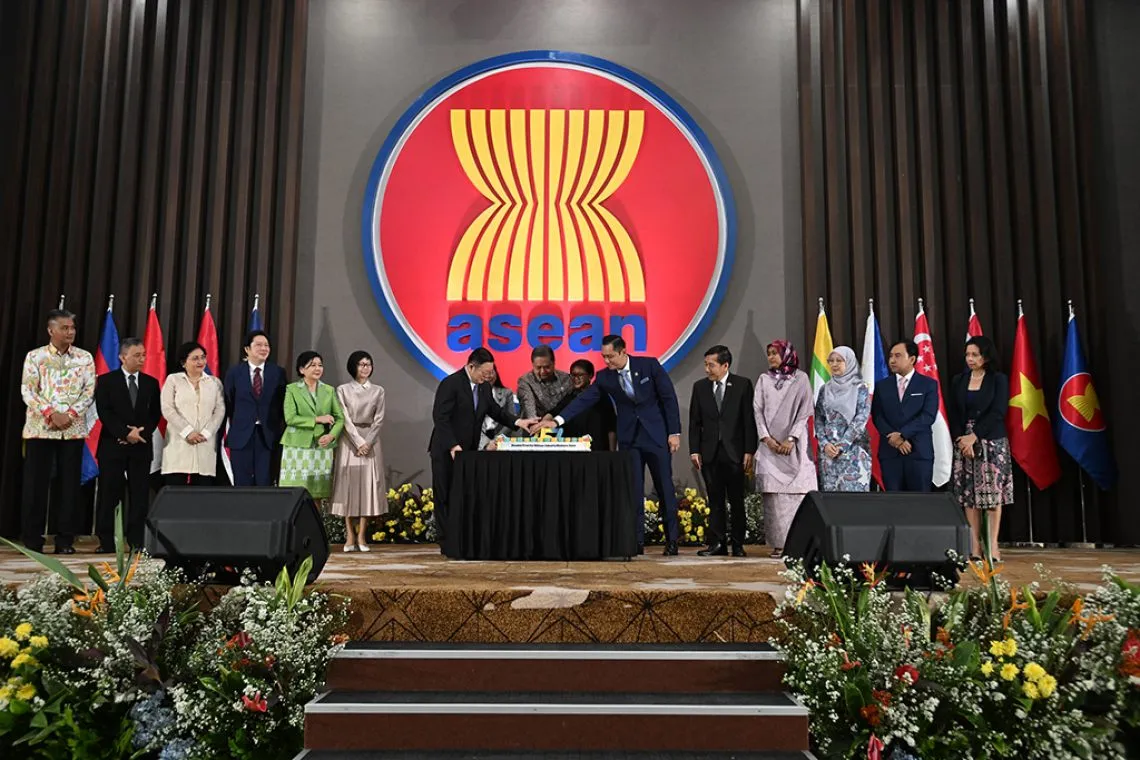
On August 8, countries across Southeast Asia mark ASEAN Day. In 2026, the day celebrates the 59th anniversary of the Association of Southeast Asian Nations. The official ASEAN calendar lists August 8 as both ASEAN Day and the organization's 59th anniversary. [1]
ASEAN began on August 8, 1967. Foreign ministers from Indonesia, Malaysia, the Philippines, Singapore and Thailand met in Bangkok and signed the ASEAN Declaration. Their goal was to improve cooperation and stability in the region. [2]
The organization later grew. Brunei Darussalam, Viet Nam, Laos, Myanmar and Cambodia joined in different years. Timor-Leste became ASEAN's eleventh member in 2025. [2]
ASEAN works in several areas. Member countries discuss trade, education, health, travel, culture, security and environmental problems. They do not always agree, but they have a regular place to talk and make plans.
The ASEAN Secretariat is in Jakarta, Indonesia. ASEAN Day events there often include speeches, music, cultural performances, exhibitions and food from around the region. The celebrations help people see ASEAN as more than meetings between government officials. [3]
ASEAN Day is not the same as a national independence day. Each member country keeps its own government, flag and national traditions. The day celebrates cooperation between different countries rather than the creation of one new country.
Regional cooperation can affect ordinary life. Agreements may make travel easier, support student exchanges, improve disaster response or help businesses sell products across borders. However, results can take time because every member has its own interests.
The event also raises questions about regional identity. A person may feel strongly Filipino, Indonesian or Vietnamese while also feeling connected to Southeast Asia. These identities do not have to compete with each other.
ASEAN Day offers a simple idea: neighbouring countries can remain different while solving some problems together. The celebration matters most when regional cooperation produces practical benefits that people can see in their daily lives.
Discussion Questions
- What regional organization does your country belong to, and how does it affect daily life?
- Which problems are easier for neighbouring countries to solve together?
- How can a regional celebration feel meaningful to ordinary people?
- In what ways can national and regional identities support each other?
- What should ASEAN or a similar organization focus on during the next ten years?