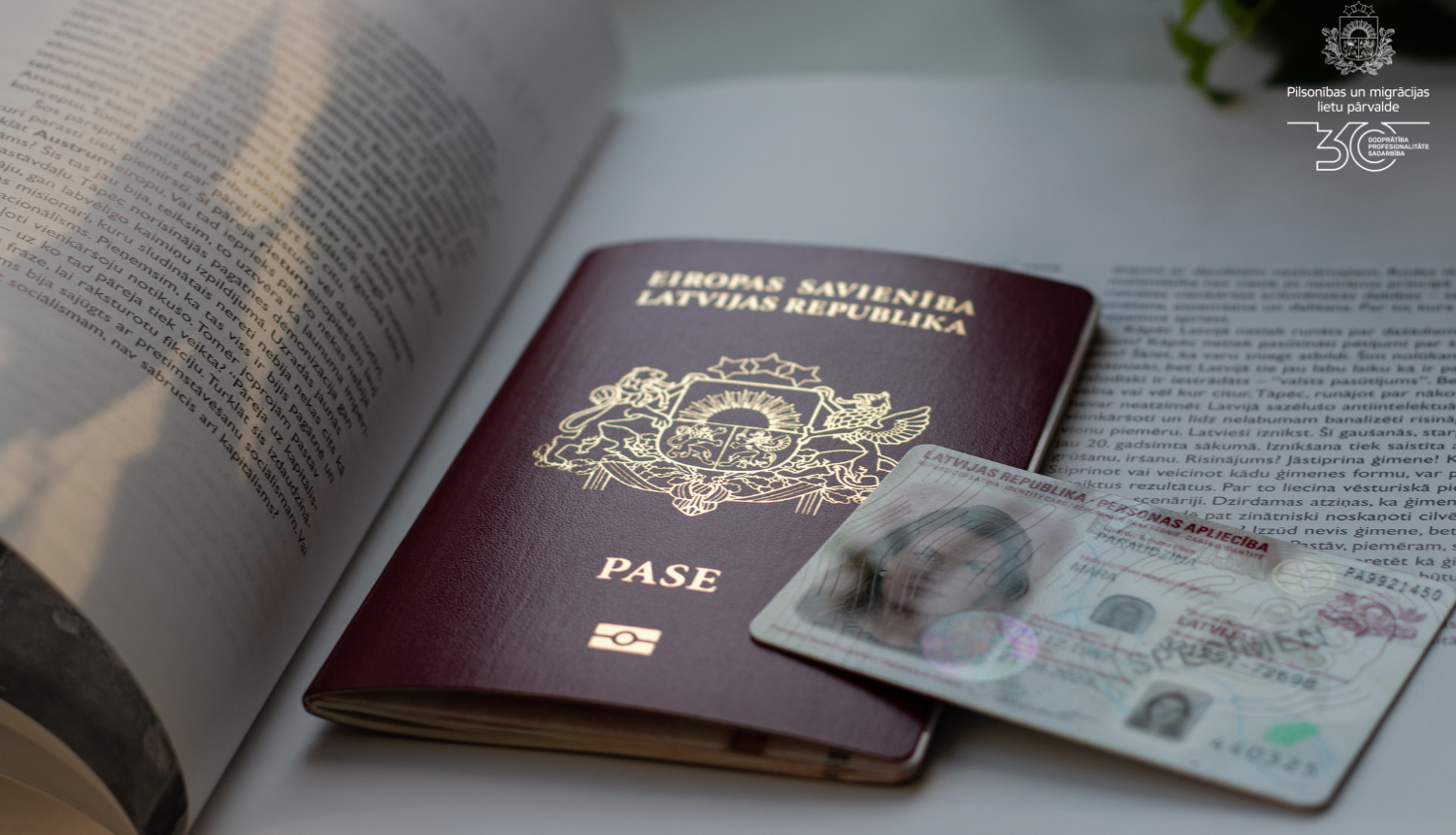
How Latvia Turned Its Identity Card into a Digital Key
Key Vocabulary
| Word or Phrase | Meaning | Example |
|---|---|---|
| authentication | The process of confirming that a person or account is genuine. | The eID card provides secure online authentication. |
| electronic signature | A secure digital method of signing a document. | She submitted the contract using an electronic signature. |
| credential | Information or a document that proves identity or authority. | Users must protect their digital credentials. |
| administrative task | An official process involving records, forms or government services. | Residents can complete the administrative task online. |
| digital exclusion | A situation in which people cannot fully use digital technology or services. | Public offices must consider the risk of digital exclusion. |
Article
A national identity card traditionally proves who a person is when it is shown to a police officer, bank employee or government official. Latvia's electronic identity card, known as the eID card, also allows its holder to prove an identity online.
The card contains electronic certificates that can be activated for remote authentication. When an online service supports the system, a user can insert the card into a reader, enter a personal identification number and securely confirm who they are. [1]
The card can also be used to create an electronic signature. Latvian authorities state that a document signed with a valid qualified electronic signature has the same legal force as a document signed by hand. [1]
For Latvian citizens, the physical card has another function. It can serve as a travel document within the European Union, the European Economic Area and Switzerland. One object therefore connects physical identification, regional travel and digital administration. [1]
Latvia began issuing eID cards in 2012. The cards are similar in size to bank cards and include security features as well as personal information. Users receive private PIN codes that protect authentication and signing functions. [2]
Digital identity has supported the wider expansion of online government. Latvia's investment and development agency reports that more than 91 percent of public services are available online. Residents can use electronic systems for taxes, benefits, healthcare, education and business services. [3]
Another part of the system is the official electronic address, or e-address. This is a secure mailbox on the Latvija.gov.lv portal through which people and organizations can communicate with public institutions. [1]
The benefits are significant. A resident may complete an administrative task without travelling to an office, waiting in line or mailing paper documents. Electronic records can also reduce processing time and make government services available outside ordinary working hours.
However, digital convenience creates new responsibilities. Users must protect their cards and PIN codes, recognize fraudulent websites and update the software needed for secure access. A lost card or stolen credentials can create serious risks.
The system may also disadvantage people who lack digital skills, suitable equipment or reliable internet access. Older adults, people with disabilities and residents in remote areas may still need face-to-face assistance.
Public institutions therefore face a difficult balance. They want to move services online because digital systems can be faster and cheaper, but they must avoid treating every person as equally confident with technology.
Latvia's eID system shows that digital government is not simply a matter of building websites. It depends on trusted identification, legal rules, cybersecurity and continued support for people who cannot easily use the system alone.
Discussion Questions
- What official services can people complete online in your country?
- How much personal information should one national identity card contain?
- What risks arise when essential government services become mainly digital?
- How should governments assist citizens who lack digital skills or equipment?
- Would you trust an electronic signature as much as a handwritten one? Explain your reasoning.
References
- Office of Citizenship and Migration Affairs of Latvia, "Functions of an Identity Card." Source
- Office of Citizenship and Migration Affairs of Latvia, "eID Card: A Convenient and Safe Personal Identity Document." Source
- Investment and Development Agency of Latvia, "Latvia's Digitalisation: The Road to a Modern State Administration." Source