Why Farmers' Markets Are More Than Places to Buy Vegetables
Key Vocabulary
| Word or Phrase | Meaning | Example |
|---|---|---|
| seasonal | Available during a particular time of year. | Peaches are a seasonal fruit in many parts of Canada. |
| producer | A person or business that grows or makes goods. | Customers can speak directly with the producer. |
| local economy | The businesses and financial activity in a particular area. | The market helps support the local economy. |
| vendor | A person who sells goods, often from a stall. | Each vendor sets up a table before the market opens. |
| community gathering | An event or place where local people meet. | The weekly market has become a community gathering. |
Article
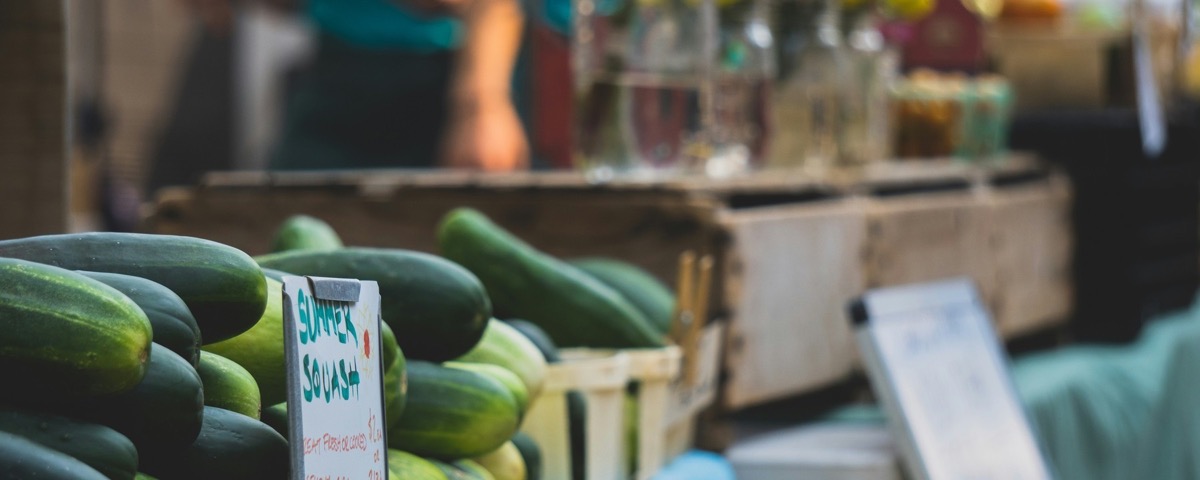
On a weekend morning in many Canadian towns and cities, people visit open-air markets to buy vegetables, bread, meat, cheese, flowers and handmade products. These places are usually called farmers' markets, although not every vendor is a farmer.
A supermarket is often faster and more predictable. It may carry the same products throughout the year and stay open every day. A farmers' market offers a different experience. The selection changes with the season, and customers may buy directly from the person who grew or made the product.
Seasonal food is one reason people visit. Berries, tomatoes, corn, apples and other foods may appear for only part of the year. Canada's Food Guide encourages people to enjoy vegetables and fruits that are in season, when they may have especially good flavour.[1]
The market also gives customers a chance to ask questions. They may want to know where a product was grown, how an animal was raised or how a sauce was made. This direct conversation can create trust, although customers should still follow normal food-safety practices. Health Canada advises shoppers to check that refrigerated foods are kept cold and to separate raw meat from other purchases.[2]
Farmers' markets can support the local economy because more of the purchase may remain with a nearby producer or small business. The St. John's Farmers' Market in Newfoundland and Labrador, for example, has been described by the federal government as a place that supports local producers, sustainable practices and connections among community members.[3]
Markets can also become social spaces. A person may meet neighbours, listen to music, try food from a different culture or attend a small community event. For some residents, the weekly visit is as important for conversation as it is for shopping.
However, farmers' markets are not automatically affordable or accessible. Some products cost more than similar goods at a large supermarket. Markets may open only once a week, operate mainly in warm weather or be difficult to reach without a car. A customer with limited time may prefer a regular grocery store.
There is also a risk of romanticizing the word local. A nearby product is not always more environmentally friendly, healthier or more ethical. The way food is produced and transported can matter more than the simple distance between a farm and a customer.
Still, farmers' markets offer something that large food systems often hide: a visible connection between food, work and place. A tomato is not only an object on a shelf. It was grown by someone, transported from somewhere and sold within a particular season.
The continuing popularity of these markets suggests that many consumers want more than low prices and convenience. They may also want personal contact, local identity and a clearer understanding of where their food comes from.
Discussion Questions
- Are farmers' markets common in your country, and who usually shops at them?
- Would you pay more for food produced near your community? Why or why not?
- Do people in your country care about eating seasonal food?
- What could make local markets more affordable and accessible?
- In your opinion, are farmers' markets mainly shopping places or social spaces?
References
- Health Canada, Canada's Food Guide Newsletter: Seasonal Produce.
- Health Canada, "Food Safety Tips for Shopping at Farmers' Markets."
- Innovation, Science and Economic Development Canada, "Success Story: The St. John's Farmers' Market."